Many Technical Program Managers reach a point where titles start to blur. Senior TPM. Lead TPM. Both sound advanced. Both work on complex programs. Both deal with stakeholders, risks, and delivery pressure.
But in real organizations, the difference is very clear. If you are aiming for faster career growth, higher compensation, or leadership roles, understanding this distinction matters.
The Core Difference in One Line
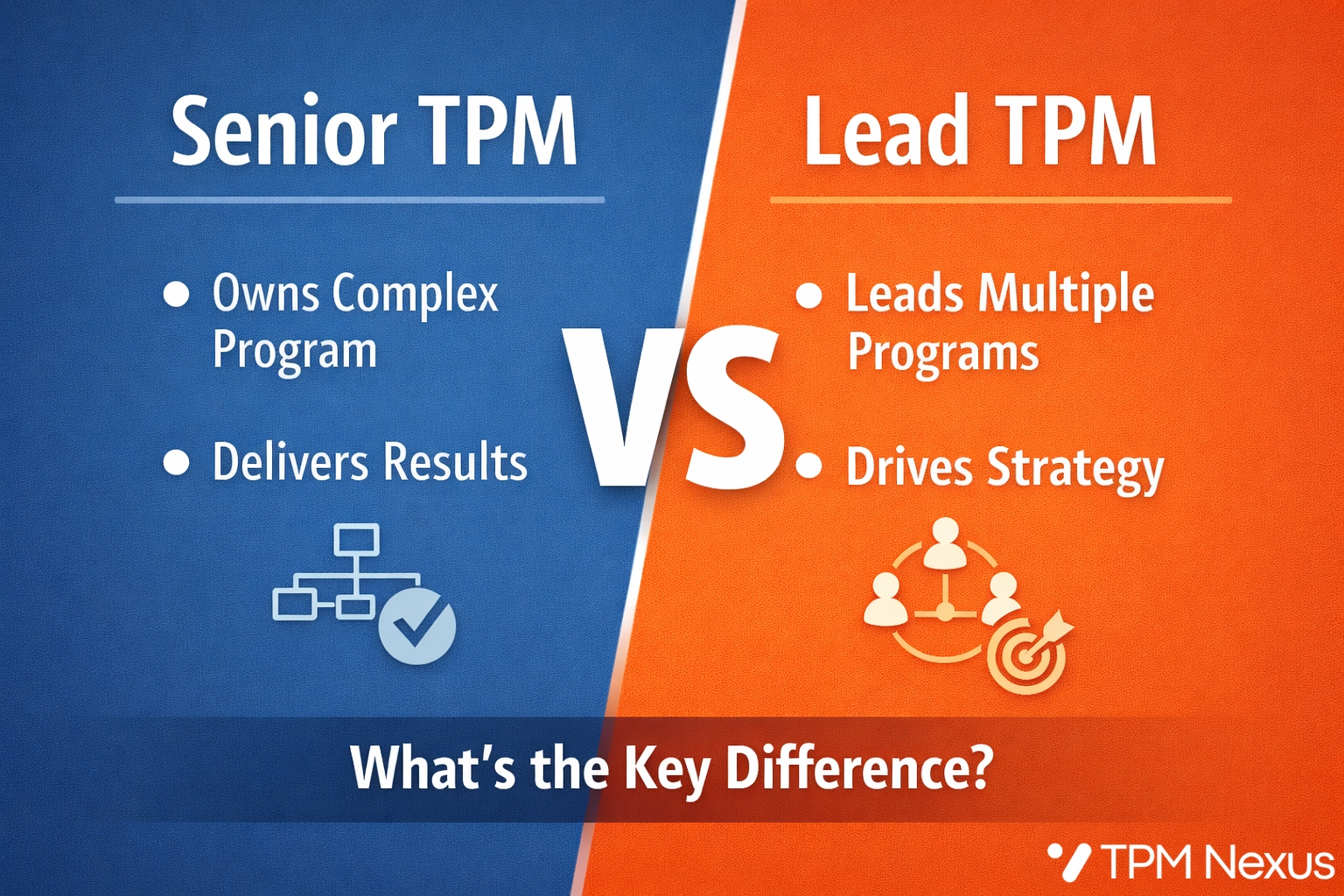
- A Senior TPM is responsible for owning and delivering complex programs.
- A Lead TPM is responsible for owning outcomes across multiple programs and TPMs.
- Everything else flows from this.
1. Scope of Ownership
Senior TPM
A Senior TPM typically owns one large program or a few tightly related programs.
- Deep involvement in planning, execution, and delivery
- Direct accountability for timelines, risks, and dependencies
- Works hands-on with engineering, product, and design
Success is measured by how well the program delivers.
Lead TPM
A Lead TPM operates at a broader level.
- Owns a portfolio of programs
- Oversees other TPMs
- Focuses on alignment across teams, not just one initiative
Success is measured by how smoothly multiple programs move together.
2. Decision Making Style
Senior TPM
Senior TPMs make execution-level decisions.
- Tradeoffs within scope and timeline
- Prioritization within a single program
- Risk mitigation at task and dependency level
They are close to the details.
Lead TPM
Lead TPMs make structural decisions.
- How programs are sequenced
- Where capacity should be invested
- When to escalate or pause initiatives
They think in systems, not tasks.
3. Relationship with Stakeholders
Senior TPM
- Regular interaction with engineering managers and product managers
- Clear communication on progress, risks, and delivery dates
- Trusted execution partner
They answer the question. Will this program ship on time?
Lead TPM
- Frequent interaction with senior leadership
- Aligns program goals with business priorities
- Resolves conflicts between teams or programs
They answer the question. Are we working on the right things in the right order?
4. People Leadership
This is where the gap becomes obvious.
Senior TPM
- Leads through influence
- Mentors junior team members informally
- Focused primarily on program delivery
Lead TPM
- Coaches and reviews other TPMs
- Sets quality bars for program execution
- Shapes how TPMs operate across the organization
A Lead TPM multiplies impact through others.
5. Metrics and Success Signals
Senior TPM is evaluated on:
- Delivery predictability
- Risk management
- Cross-functional execution quality
Lead TPM is evaluated on:
- Program portfolio health
- Consistency of execution across teams
- Stakeholder confidence and trust
Senior TPMs deliver programs. Lead TPMs stabilize organizations.
6. Mindset Shift Required to Move Up
Many Senior TPMs get stuck because they keep operating the same way. To move from Senior TPM to Lead TPM, you must shift from:
- Doing to enabling
- Managing tasks to managing systems
- Solving problems to preventing them
This shift is not about working harder. It is about thinking differently.
7. How to Prepare Yourself for a Lead TPM Role
If your goal is career growth, start doing this before the title changes.
- Take ownership beyond your assigned program
- Mentor other TPMs deliberately
- Speak in terms of outcomes, not tasks
- Highlight cross-program dependencies proactively
- Build credibility with leadership, not just teams
Organizations promote people who already operate at the next level.
Final Takeaway
A Senior TPM proves they can execute complex programs. A Lead TPM proves they can scale execution across teams and programs. If you are clear about this distinction and start acting accordingly, the title usually follows.
Built for TPMs who own outcomes, not demos. https://www.tpmnexus.pro/