Claude as a Product: A Product Manager's Perspective
Explore Claude as an AI product from a Product Manager's perspective, including product strategy, user problems, AI UX, agentic workflows, enterprise strategy, prioritization, trust, and product metrics.
Case Study Summary
Claude is often discussed as an AI model.
That is the wrong starting point for a Product Manager.
What job is Claude trying to own for the user, and why should that user choose Claude repeatedly when several other AI products are available?
Claude has expanded well beyond a conversational interface. Projects introduced persistent workspaces around conversations and knowledge. Claude can create and edit files. Claude Code takes AI into software development. Cowork extends agentic execution into broader knowledge work. Claude Design moves into visual creation, while Claude Tag brings Claude into team workflows through Slack. Claude Science targets scientific research with specialized tools, connectors, and auditable outputs.
From a Product Management perspective, that evolution tells a much more interesting story.
It is a story about moving from answering questions to helping people complete work.
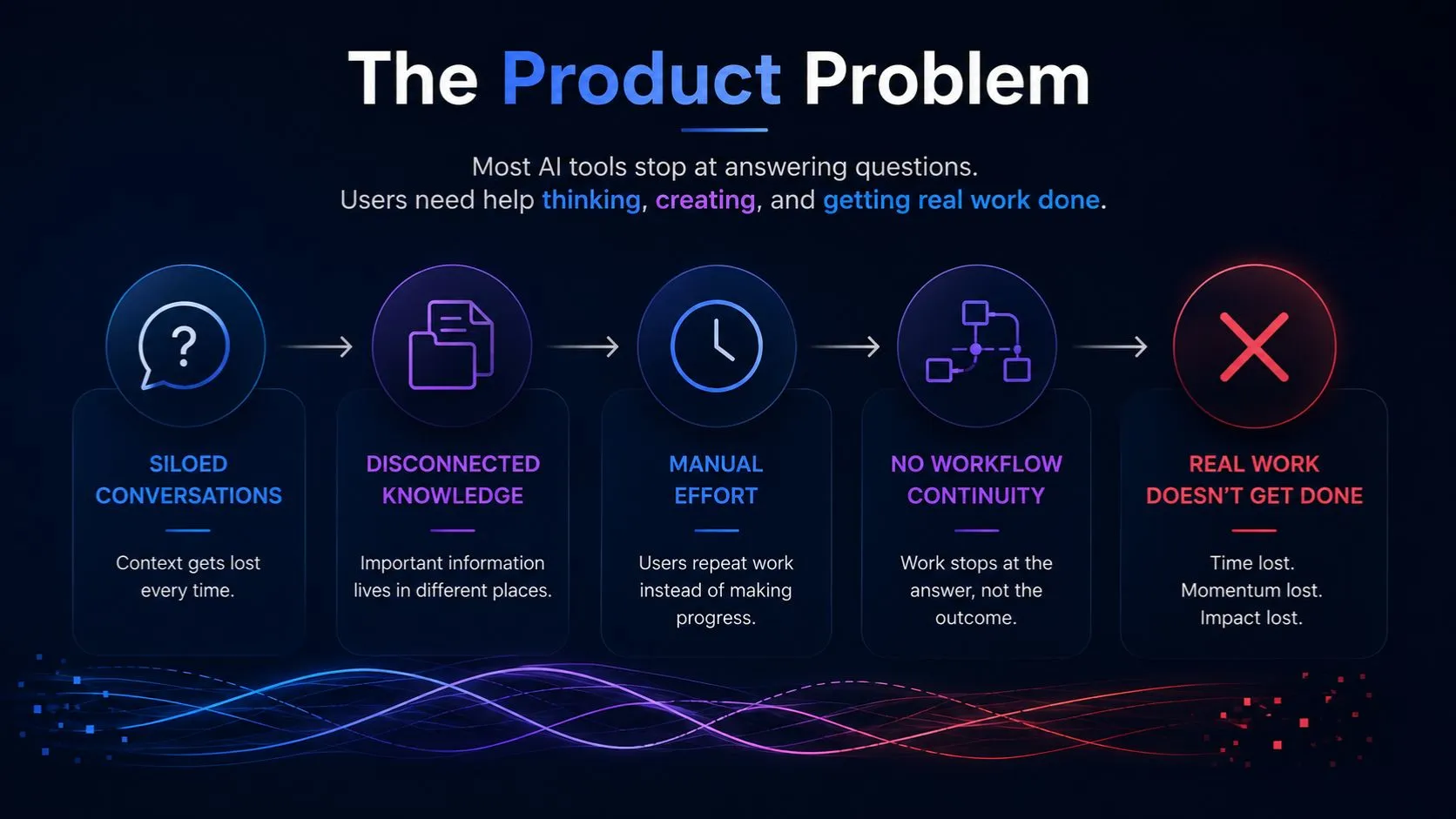
The Product Manager Walks Into the Problem
Imagine joining the Claude product team.
The market is already crowded.
Users can choose from ChatGPT, Gemini, Microsoft Copilot, Perplexity, coding agents, open source models, and a growing number of specialized AI products.
Your model may be excellent. But that alone does not guarantee product success.
The user does not wake up thinking:
"I need a model with stronger reasoning."
They wake up thinking:
- I need to prepare this customer presentation.
- I need to understand this 200 page document.
- I need to analyze these customer interviews.
- I need to fix this software issue.
- I need to build a prototype.
- I need to analyze this dataset.
That distinction is the starting point for the case study.
The product opportunity is not simply to build a better chatbot.
The opportunity is to become part of how the user gets meaningful work done.
What Is Claude Actually Selling?
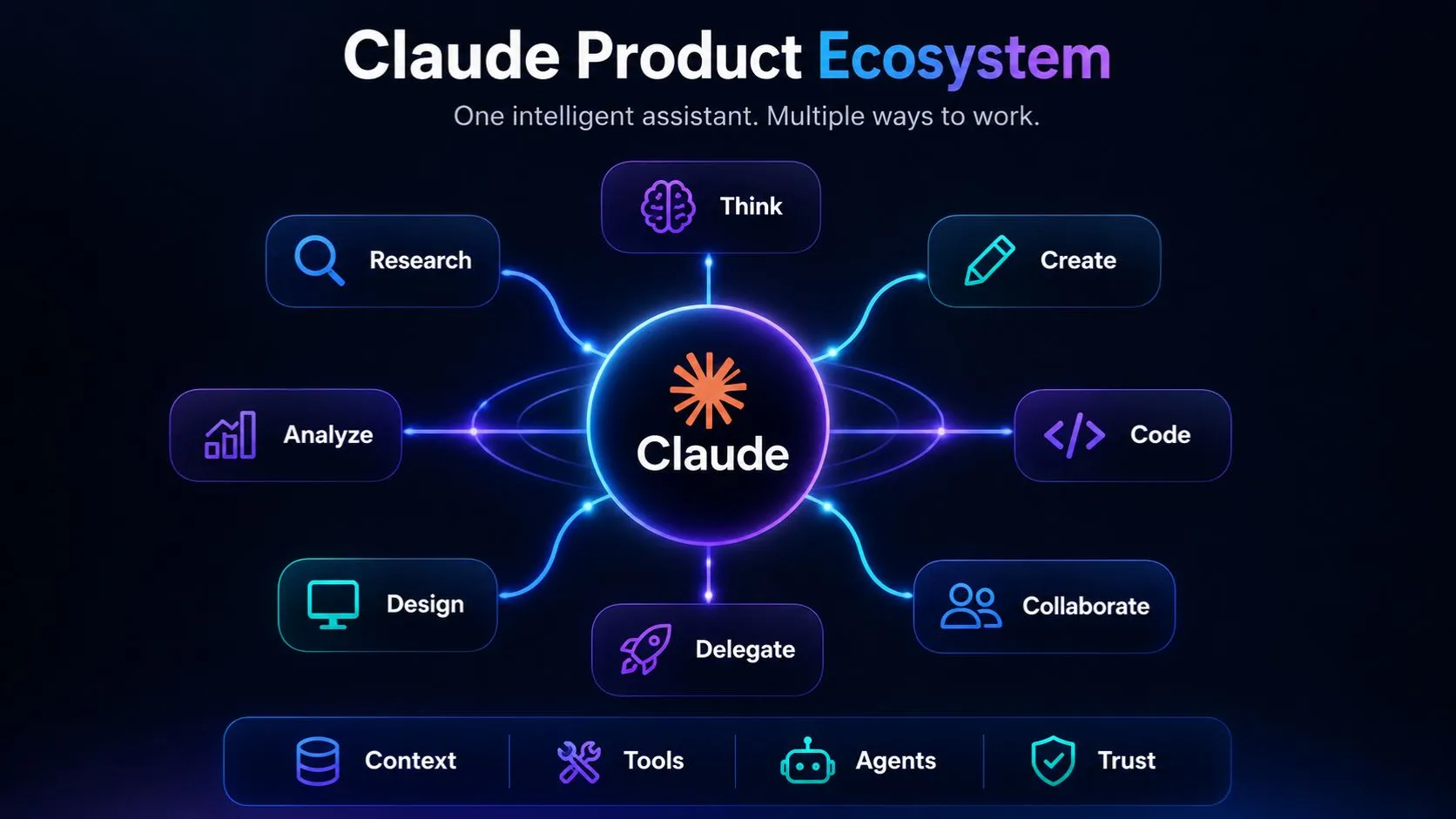
Claude is not selling intelligence in isolation.
It is selling an improvement in the user's ability to accomplish work.
Intelligence
The model provides reasoning and intelligence needed to understand and solve problems.
Context
Context tells the system what the work is about and provides the relevant environment.
Tools
Tools allow Claude to interact with information, systems, files, and workflows.
Workflow
Workflow determines where Claude fits into the user's existing process.
Trust
Trust determines how much autonomy the user is willing to give the system.
Claude's Product Value
Intelligence + Context + Tools + Workflow + Trust
Suppose Claude becomes 10 percent better at answering questions. That is useful.
But suppose Claude can instead take a product requirements document, understand the company's previous decisions, analyze customer feedback, create a prototype, write implementation code, and prepare a review document.
That could change the user's workflow entirely.
From a Product Manager's perspective, the second opportunity may have significantly greater product value.
The First Product Decision: What Job Should Claude Own?
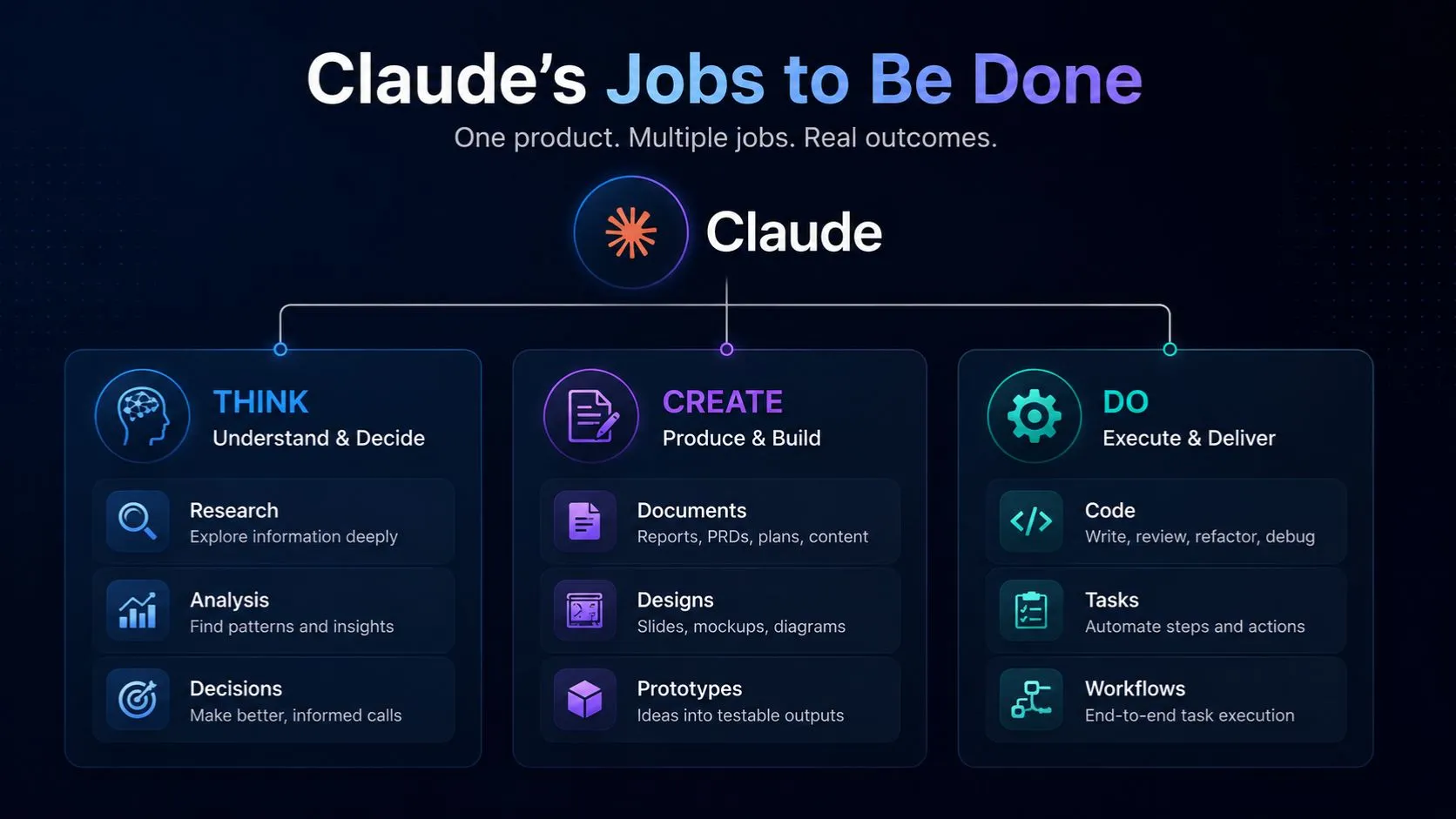
I would use a Jobs to Be Done lens.
The user does not hire Claude because they want "AI."
They hire Claude to accomplish a job.
| User | Job to Be Done |
|---|---|
| Product Manager | Understand customer problems and make better product decisions |
| Engineer | Understand, modify, and operate software |
| Analyst | Analyze data and produce insights |
| Researcher | Explore information and produce evidence |
| Designer | Explore and refine product concepts |
| Executive | Synthesize information and make decisions |
| Operations Team | Complete repetitive knowledge work |
The common thread is not the profession.
It is the nature of the work.
The work involves information, reasoning, creation, and execution.
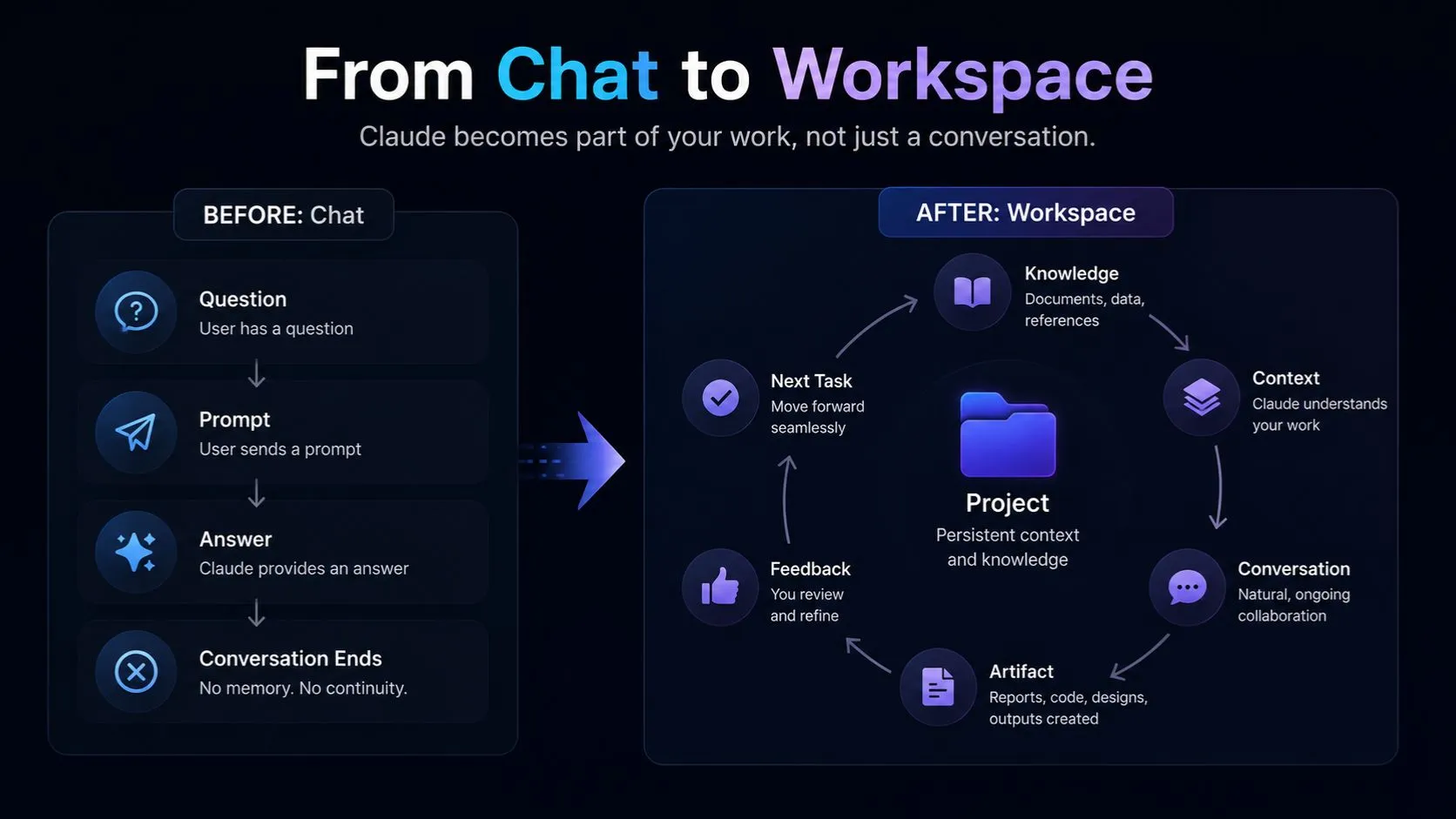
Why Context Became a Product Feature
One of Claude's early product decisions is particularly important.
Anthropic introduced Projects in 2024, allowing Pro and Team users to organize chats around dedicated projects containing knowledge and conversation history. At launch, each project included a 200K context window.
Anthropic positioned Projects as a way to ground Claude in internal knowledge such as style guides, codebases, interview transcripts, and previous work.
That may sound like a feature improvement.
From a Product Manager's perspective, it addresses a much deeper problem.
The Cold Start Problem
Every new AI conversation has a context problem.
The user has to explain who they are, what they are working on, what happened previously, which documents matter, what terminology the organization uses, and what constraints exist.
That creates friction.
Instead of:
"Here is my question."
Projects move the interaction toward:
"Here is the environment in which I work."
That is a significant product shift.
Claude's Projects capability also uses Retrieval Augmented Generation when project knowledge approaches context limits, allowing larger project knowledge bases to be handled without requiring everything to fit directly into the active context.
Context is not merely a technical capability. Context can become part of the user experience and the product's retention mechanism.
From Conversation to Workspace
Think about how a Product Manager works on a product launch.
The work might span six weeks.
- Customer interviews
- Product requirements
- Competitive analysis
- Analytics
- Roadmap discussions
- Design decisions
- Engineering constraints
- Executive feedback
- Launch material
If Claude is used once to summarize a document, the value ends with that conversation.
If Claude becomes part of the product launch workspace, the relationship changes.
The user returns. The context accumulates. The workflow becomes easier. The product becomes more valuable.
The strongest product retention often comes from becoming part of an existing workflow, not simply from getting more prompts.
The Bigger Shift: Claude Starts Doing the Work
This is where Claude becomes particularly interesting as an AI product.
Anthropic's product development has increasingly moved toward agentic workflows.
Claude Code is the clearest example. It is not simply a coding autocomplete tool. Claude Code can work through a codebase, make changes, run tests, and operate across multiple steps of a development task.
Anthropic's June 2026 research analyzed approximately 400,000 Claude Code sessions involving roughly 235,000 people between October 2025 and April 2026. The research found that users typically made most planning decisions, while Claude made most execution decisions.
What should we accomplish?
The human defines intent, priorities, constraints, and desired outcomes.
How should we execute it?
Claude increasingly handles execution across multiple steps within defined boundaries.
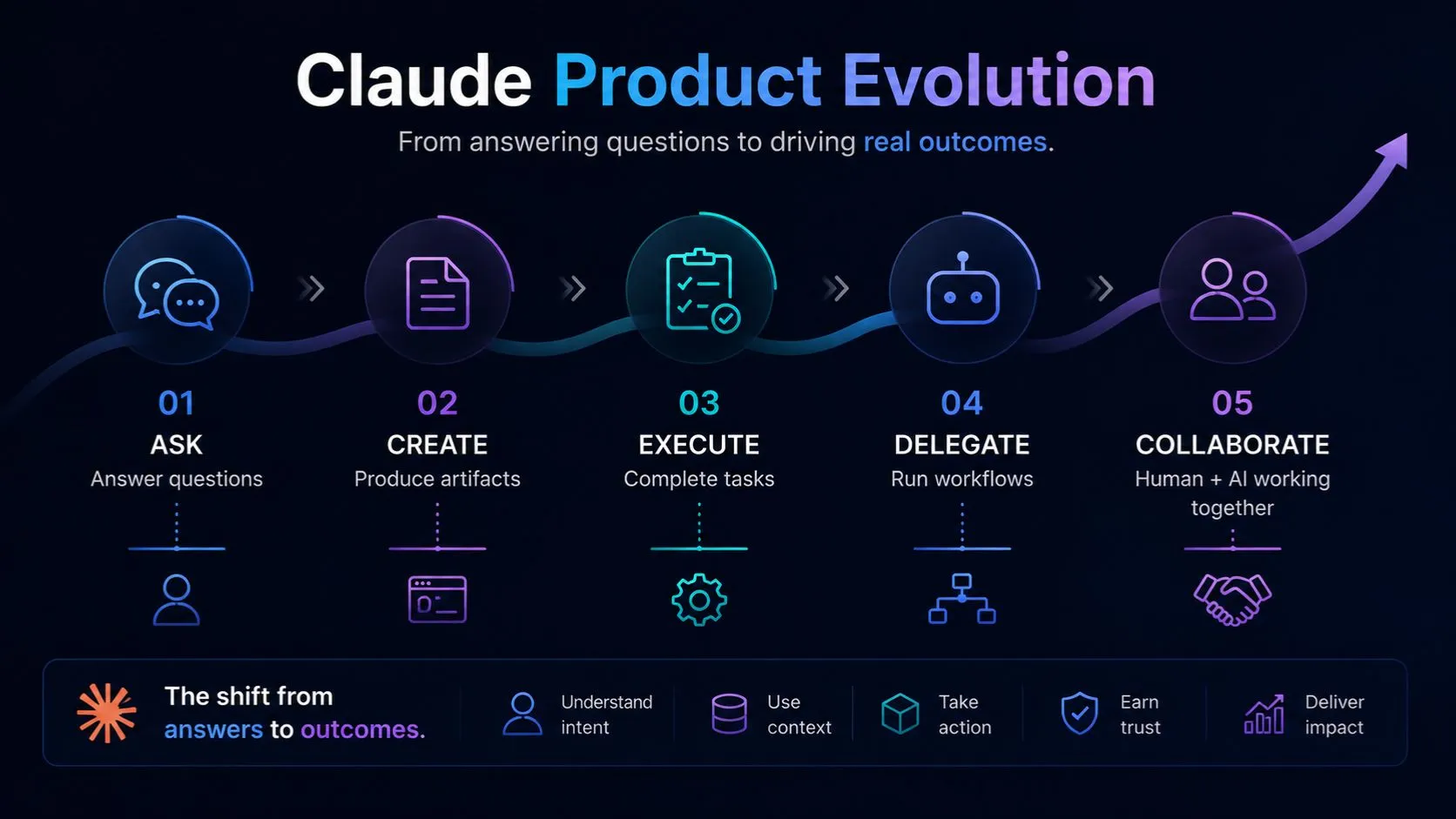
The Product Evolution: Ask → Create → Delegate
01
Ask
Claude answers questions and provides information.
02
Create
Claude produces useful artifacts and content.
03
Delegate
Claude handles multi-step workflows and execution.
04
Collaborate
Humans and AI continuously review, revise, and complete work together.
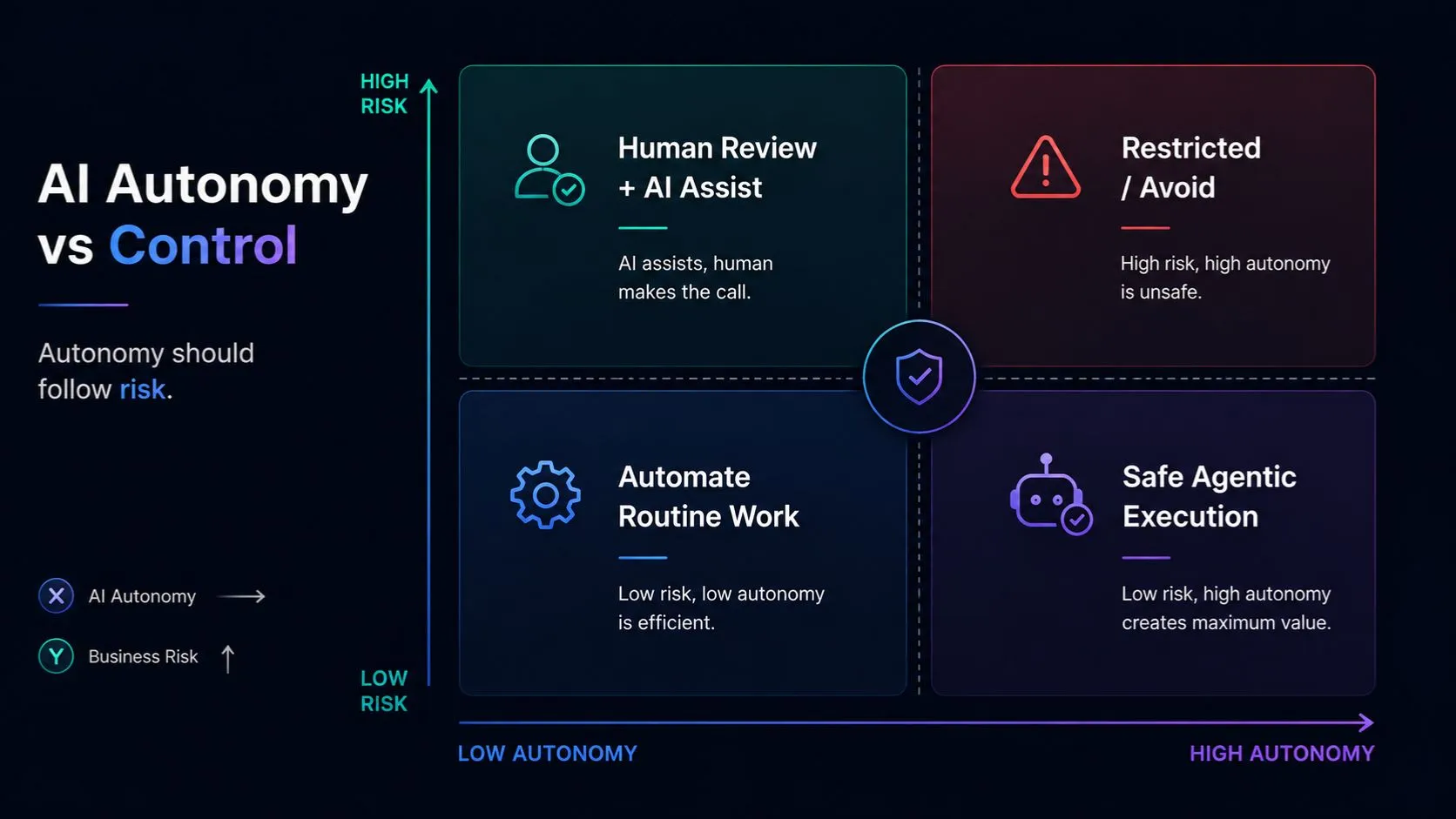
But More Autonomy Creates a Product Problem
If Claude only answers questions, the risk is relatively contained.
If Claude can act, the consequences of mistakes become larger.
Situation A
Claude writes a poor paragraph. The user edits it. Low cost.
Situation B
Claude changes the wrong code. An engineer discovers the issue. Higher cost.
Situation C
Claude has access to business systems and performs an incorrect action. Now the product has a governance problem.
The Product Manager therefore has to balance:
Capability + Autonomy + Trust
The product cannot simply maximize autonomy. It has to maximize useful autonomy within acceptable boundaries.
Trust Becomes a Product Feature
Anthropic's engineering work on containment provides an interesting window into this problem.
Anthropic describes a central challenge of agentic systems as managing "blast radius". As agents gain more access and capabilities, the potential impact of a failure increases.
Its approach across Claude, Claude Code, and Cowork is to contain the consequences of failures rather than relying only on the assumption that the model will never make a mistake.
How do we prevent the system from causing unacceptable damage when it makes a mistake?
That changes product architecture.
Claude Code Reveals Another Product Insight
Anthropic's 2026 research provides an especially interesting observation for Product Managers.
Across roughly 400,000 Claude Code sessions, users typically made around 70 percent of planning decisions while Claude made around 80 percent of execution decisions.
That suggests an emerging human-AI interaction model:
Human Owns Intent
AI Owns Increasing Execution
This has implications far beyond coding.
A Product Manager might define:
"Find the three biggest reasons enterprise customers are not adopting this feature."
Claude could potentially retrieve customer feedback, group the feedback, analyze patterns, compare findings with usage data, identify likely causes, prepare a recommendation, and create a presentation.
The Product Manager still owns the decision. But much of the preparation could be delegated.
Claude Is Moving Beyond Developers
It would be easy to interpret Claude's agentic strategy as primarily a developer strategy. That would be too narrow.
Anthropic's product portfolio now points toward a broader professional-work strategy.
Claude Design
Visual creation, prototypes, slides, one-pagers, and other design-oriented work.
Claude Science
Scientific tools, connectors, specialist agents, and reproducible research artifacts.
Claude Tag
Team workflows through Slack, connected tools, and organizational information.
Claude is increasingly becoming a layer through which professionals interact with knowledge, tools, and workflows.
The Product Surface Is Expanding
From a Product Manager's perspective, this creates both an opportunity and a risk.
The opportunity is obvious. More workflows mean more opportunities to create value.
But there is a second problem.
Feature Sprawl
The user should not need to understand Anthropic's internal product architecture.
I have work to do. Claude can help me get it done.
That should remain the mental model.
Enterprise Changes the Product
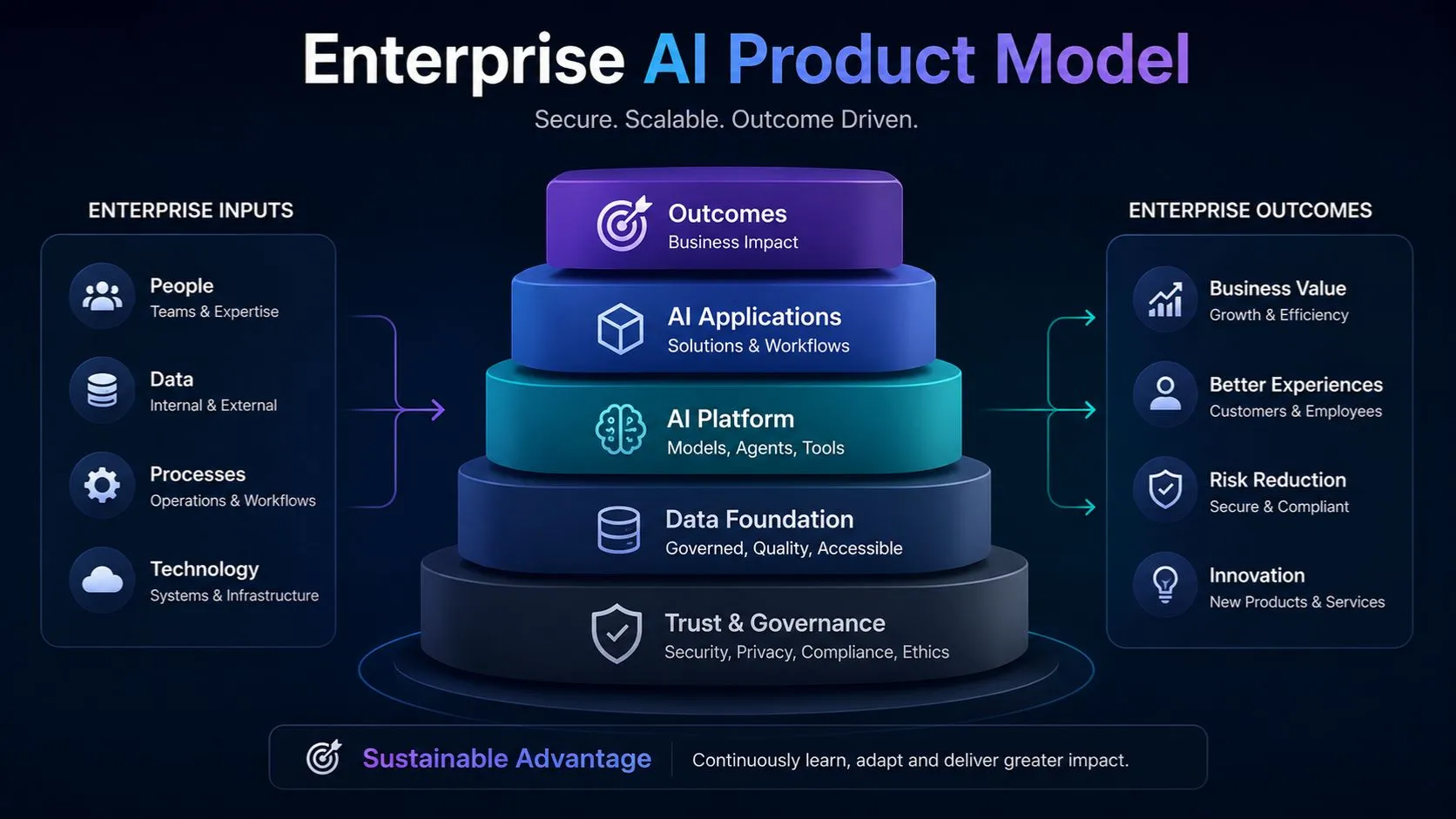
Consumer AI and enterprise AI have different definitions of "good."
A consumer may ask:
"Does Claude help me?"
An enterprise buyer asks:
"Can I safely deploy Claude across thousands of employees?"
Enterprise customers need:
- SSO
- Identity management
- Role based permissions
- Audit logs
- SCIM
- Data retention controls
- Usage management
- Integrations
- Governance
- Cost controls
Enterprise AI is not consumer AI with an enterprise pricing page.
The product itself has to solve a different problem.
The Enterprise Product Is Actually Two Products
Claude Should Feel
- Fast
- Useful
- Flexible
- Context-aware
- Capable
- Easy to delegate to
Organization Needs
- Permissions
- Security
- Auditability
- Data controls
- Spend controls
- Monitoring
- Administration
The Monetization Question
A Product Manager also has to ask:
Who is willing to pay, and why?
Individual Users
Pay for higher usage and more capable experiences.
Power Users
Derive enough value from Claude that higher usage limits become economically meaningful.
Teams
Pay for collaboration and organizational use.
Enterprises
Pay for scale, security, administration, governance, and organizational deployment.
Developers
Use Claude capabilities through APIs and build products on top of the platform.
Individual → Power User → Team → Enterprise → Developer Ecosystem
What Should Claude's Product Manager Measure?
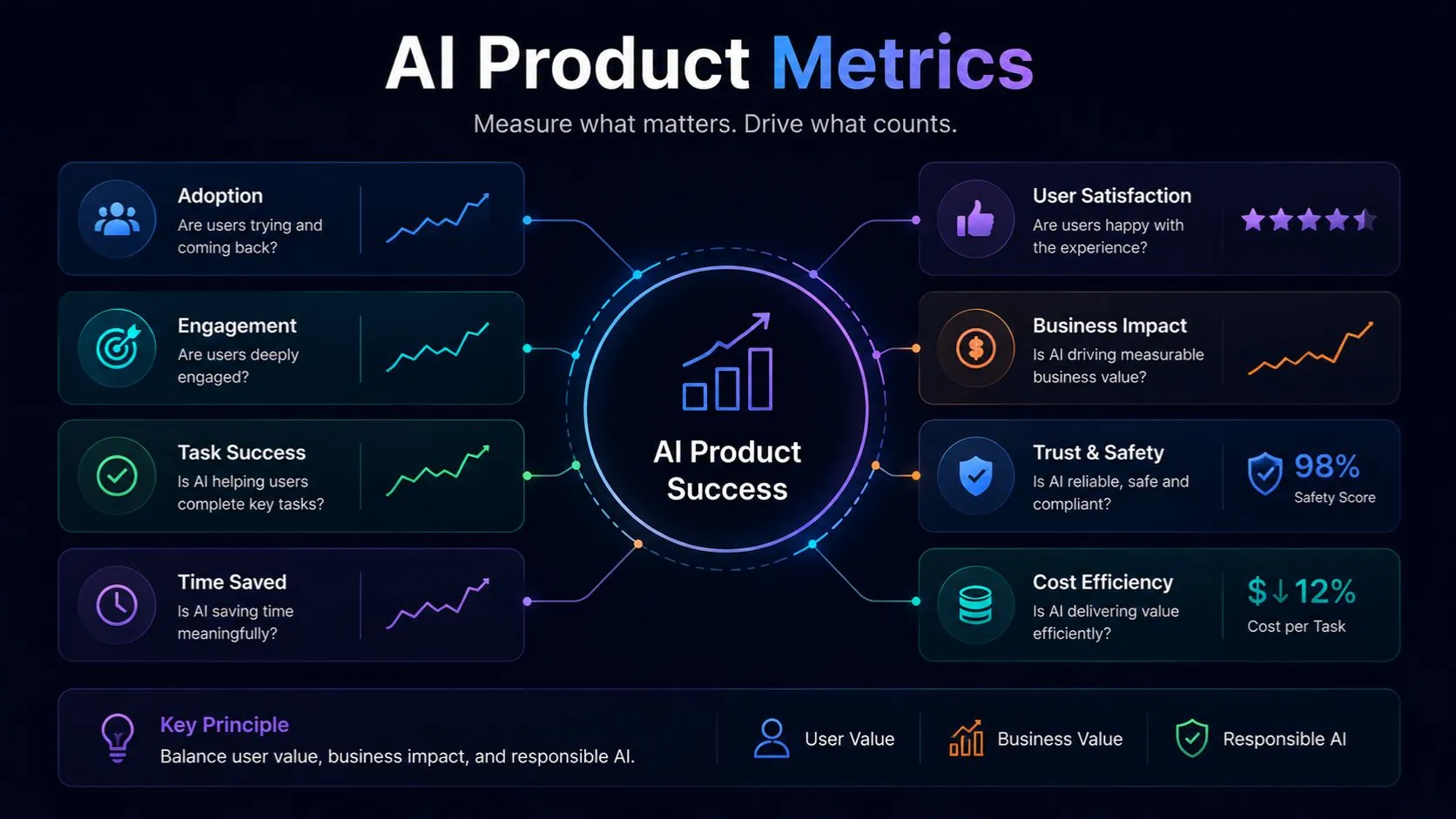
A team can easily celebrate messages sent, tokens consumed, and daily active users.
Those metrics tell us whether people are interacting with the product. They do not necessarily tell us whether Claude created meaningful value.
| Product Area | Metric |
|---|---|
| Activation | Time to first successful outcome |
| Engagement | Meaningful workflows per active user |
| Retention | Users returning to continue workflows |
| Efficiency | Time saved per completed task |
| Quality | Output acceptance rate |
| Agentic Usage | Tasks completed with multiple autonomous steps |
| Trust | Actions accepted without rollback |
| Reliability | Successful task completion |
| Business Value | Productivity or revenue impact |
| Enterprise | Active seats and workflow adoption |
Did Claude help the user accomplish something valuable?
Not simply:
Did the user send another prompt?
What Would I Prioritize as Claude's Product Manager?
Imagine the roadmap contains these requests:
Every option is defensible. That is exactly why prioritization matters.
I would evaluate opportunities using four dimensions:
| Dimension | Product Question |
|---|---|
| User Value | How painful is the problem? |
| Frequency | How often does it occur? |
| Autonomy Potential | Can Claude meaningfully execute the task? |
| Trust Readiness | Can we safely deploy it? |
A high-value, frequent, safe workflow with strong autonomy potential becomes a strong candidate.
A technically impressive feature that users rarely need does not.
What I Would Not Build
A roadmap is not only about what gets built. It is also about what gets rejected.
- Features that look impressive in demos but solve weak customer problems.
- Another interface without improving a workflow.
- Increased autonomy without sufficient controls.
- Additional product complexity without meaningful user value.
- Features that generate usage but not outcomes.
- Significant infrastructure investment for a low-frequency job.
- Capabilities that can be easily replicated without creating workflow differentiation.
Does this move Claude closer to owning a valuable user workflow?
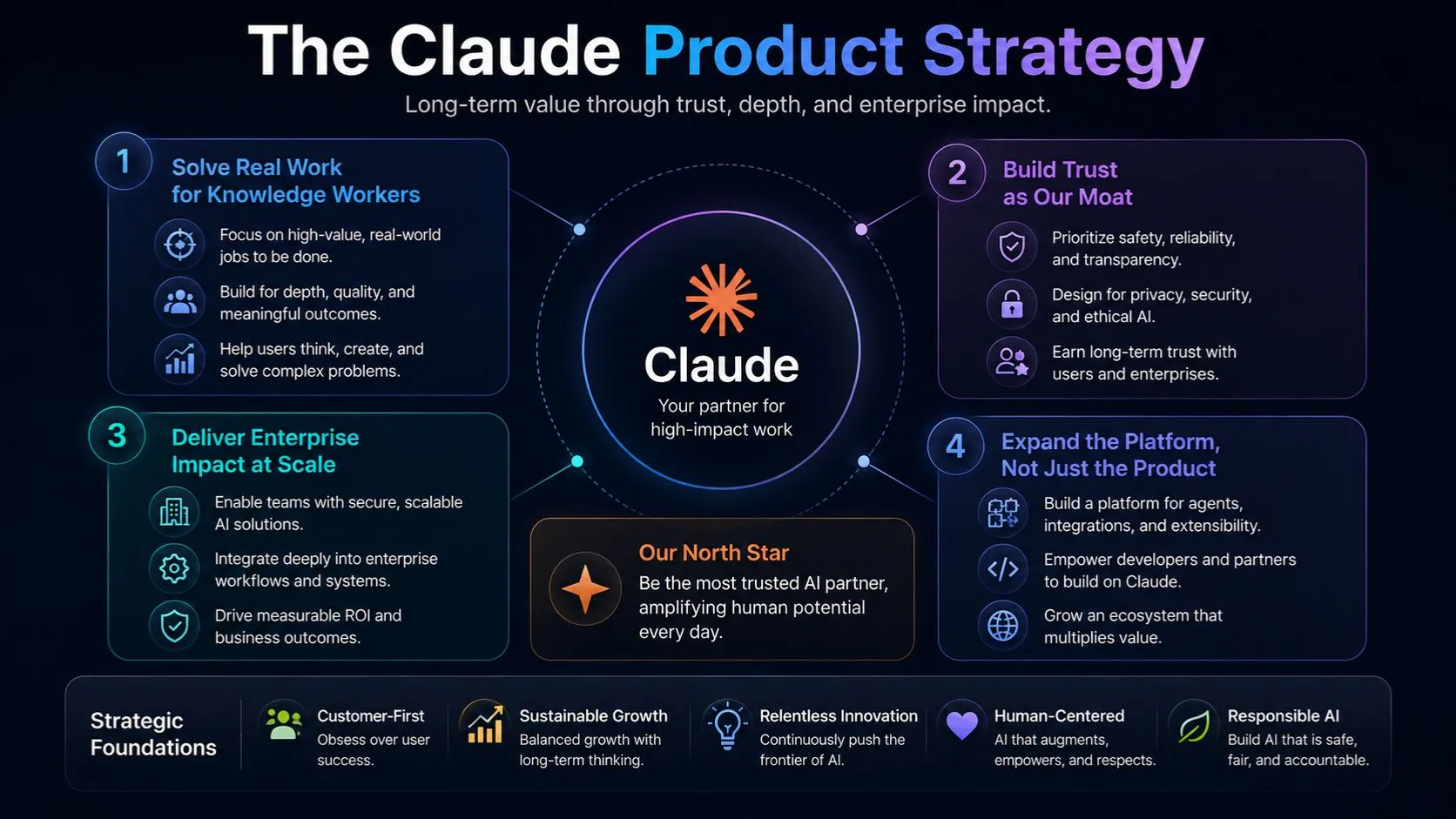
A Product Strategy I Would Recommend
If I were responsible for Claude's product strategy, I would frame the direction this way:
Move Claude from an AI assistant that helps people think into an AI work partner that helps people complete meaningful work.
Ask
Claude answers questions.
Understand
Claude works with the user's context.
Create
Claude produces useful artifacts.
Connect
Claude works with tools and organizational information.
Delegate
Claude executes multi-step tasks.
Review
The human validates important outcomes.
Trust
The system earns permission to handle more work.
The Competitive Question Is Wrong
When people compare Claude with ChatGPT or Gemini, the conversation often becomes:
"Which model is better?"
That is useful for model evaluation. It is not enough for product strategy.
The better question is:
Which product owns which workflow?
One product may win a particular research workflow. Another may win a workplace productivity workflow. Another may win coding. Another may win search.
The AI market is moving toward convergence. Models are becoming more capable. Agents are becoming more common. Tools are becoming connected.
Therefore, long-term product differentiation may increasingly depend on:
Workflow Ownership + Trust + Context + Integrations + User Experience + Distribution
Rather than model capability alone.
The Most Interesting Product Signal From Claude Code
Anthropic's Claude Code research contains one insight I would pay particular attention to as a Product Manager.
Anthropic found that the value of typical Claude Code tasks increased by about 25 percent on average between October 2025 and April 2026, using freelance job postings as a rough comparison.
The researchers also observed a shift from debugging toward operating software, data analysis, and document work.
That suggests something important.
Users are not simply asking the agent to produce more code. They are increasingly using it for end-to-end work.
That is a different product category.
And it raises a much bigger question:
If AI can execute more of the workflow, where should the product stop?
The Product Manager's Biggest Challenge
The hardest problem for Claude may not be model intelligence.
It may be deciding how much responsibility to give the AI.
Too Little Autonomy
The product feels like an expensive chatbot.
Too Much Autonomy
The user loses trust.
Too Many Features
The product becomes complicated.
Too Few Integrations
The product cannot participate in real workflows.
Too Much Context
The product can become expensive or difficult to reason about.
Too Little Context
The AI repeatedly asks the user to explain the same things.
The Product Manager is constantly balancing these tensions.
That is the actual product challenge.
What Claude Teaches Product Managers About AI Products
Lesson 1: Start With the Job, Not the Model
The model is an enabler. The customer job is the product opportunity.
Lesson 2: Context Can Become a Retention Mechanism
The more useful context a product maintains, the more valuable it can become within an ongoing workflow.
Lesson 3: Agentic Products Require a Different UX
The user is no longer simply prompting. They are delegating.
Lesson 4: Trust Must Scale With Autonomy
Every increase in capability should be matched by appropriate controls.
Lesson 5: Enterprise AI Is a Different Product Problem
Security, governance, and administration are part of the product, not an afterthought.
Lesson 6: Measure Outcomes
Prompt volume is not the same as customer value.
Lesson 7: Product Differentiation Will Increasingly Come From Workflows
Model capability can be copied or matched. A deeply embedded workflow is harder to replace.
Final Product Manager Take
Claude is an interesting AI product case study because its evolution shows how quickly the definition of an AI product is changing.
The first generation of AI products largely answered questions.
The next generation created content.
The emerging generation is beginning to execute work.
Claude's evolution across Projects, file creation, Claude Code, Cowork, Design, Science, and team workflows reflects that broader movement.
The important Product Management lesson is not:
"Build more AI features."
Find a valuable workflow, understand where humans create the most value, identify what the AI can safely take over, and design the product around that division of labor.
That is product thinking.
The model is only one part of the equation.
The real product is the experience created around the model.
And the strongest AI products may ultimately be the ones that users stop thinking about as "AI tools" altogether.
They simply become part of how work gets done.
How I Would Evaluate the Next Major Claude Feature
| Question | Product Decision |
|---|---|
| Does it solve a real customer problem? | Customer value |
| Does the problem happen frequently? | Usage potential |
| Can AI perform the work reliably? | Technical feasibility |
| Can we safely give the AI autonomy? | Trust readiness |
| Does it reduce workflow friction? | UX value |
| Does it create measurable outcomes? | Business value |
| Does it strengthen workflow ownership? | Strategic value |
| Does it create unnecessary complexity? | Product cost |
High Customer Value + Frequent Workflow + Reliable AI + Acceptable Risk + Measurable Outcome
That is where I would spend the roadmap budget.
Claude as a Product
Research Sources
This case study uses primarily public information published by Anthropic and its official documentation.
- Anthropic research on approximately 400,000 Claude Code sessions, including real-world agentic usage, human versus AI decision-making, and changing task composition.
- Anthropic's Projects announcement and documentation covering persistent project knowledge, instructions, and context.
- Anthropic product announcements covering Claude Code, Cowork, Claude Design, Claude Tag, and Claude Science.
- Anthropic Enterprise documentation covering organizational security, permissions, auditability, identity, and data controls.
- Anthropic engineering research covering containment and the potential blast radius of increasingly capable agents.
Case study classification: Public-product analysis + Product Management interpretation. It is not an account of Anthropic's internal roadmap or confidential decision-making.
Explore More AI Product Case Studies
Explore practical AI Product Management case studies covering product strategy, AI UX, enterprise AI, agents, prioritization, and measurable business outcomes.