Technical Program Management has always been about execution.
Planning programs.
Managing dependencies.
Reducing risks.
Aligning teams.
Delivering outcomes.
Those responsibilities remain critical.
However, enterprise technology is changing rapidly.
Organizations are investing heavily in AI while expecting faster innovation, better customer experiences, and measurable business value.
This shift is redefining what it means to be an effective Technical Program Manager.
Today, successful TPMs need more than execution excellence.
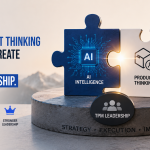
They need product thinking combined with AI awareness.
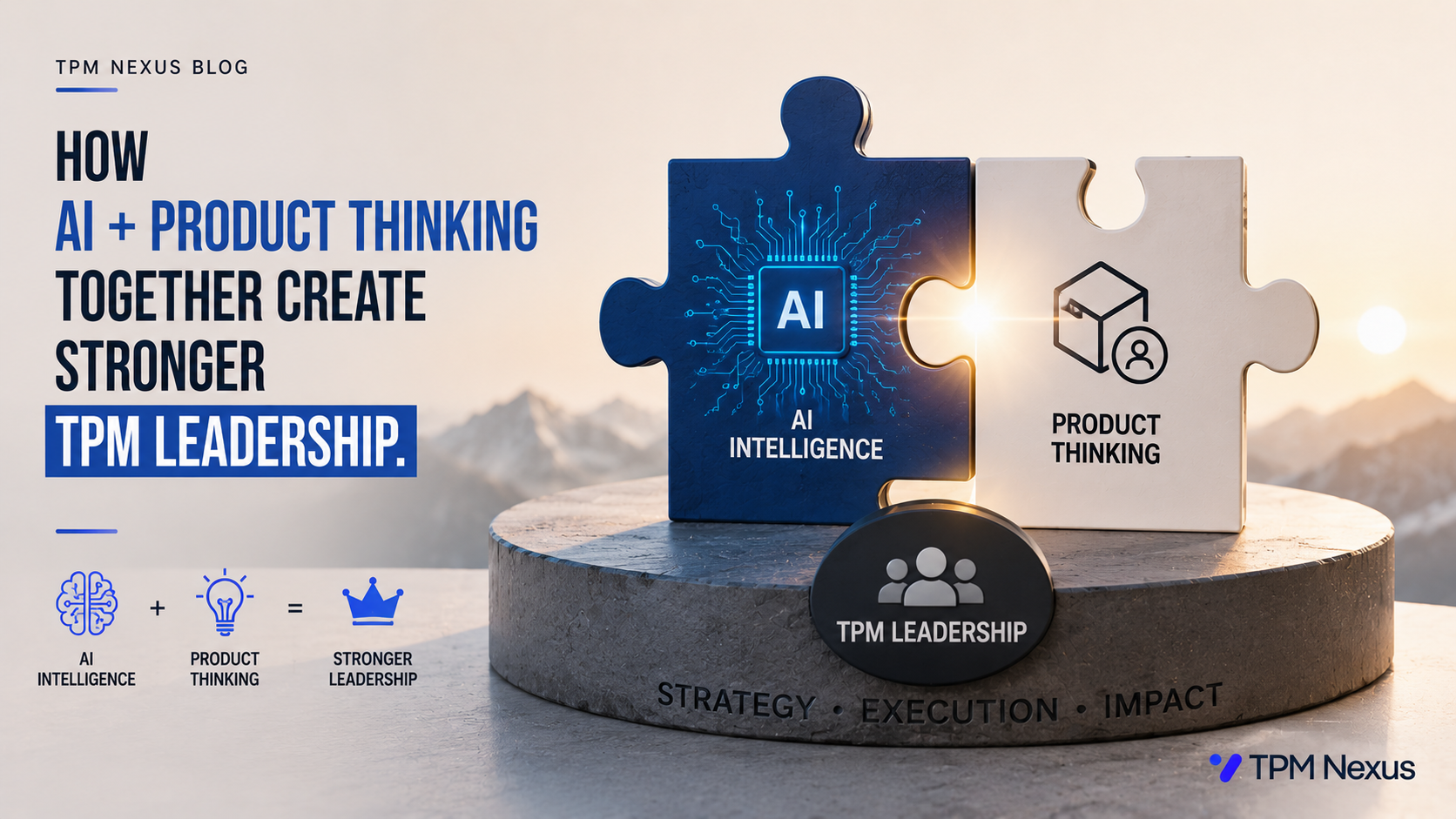
Together, these capabilities enable TPMs to lead programs that deliver meaningful business outcomes rather than simply completing projects.
The Traditional TPM Mindset
For years, TPM success was measured by execution metrics.
Questions such as these were common:
- Are we on schedule?
- Are risks under control?
- Are teams aligned?
- Is the release on track?
- Are stakeholders informed?
These questions are still important.
But they focus primarily on delivery.
They do not necessarily answer whether the team is building the right solution.
Why Product Thinking Matters
Product thinking shifts the conversation.
Instead of asking only whether work is progressing, it asks whether the work creates value.
A TPM with strong product thinking continuously asks:
- What customer problem are we solving?
- Why is this feature important?
- What business outcome are we trying to achieve?
- How will success be measured?
- Is there a simpler solution?
This perspective improves decision making throughout the program lifecycle.
Teams become more focused on outcomes instead of outputs.
Stakeholders become aligned around business value instead of feature counts.
Execution becomes more meaningful.
The AI Revolution Changes the Role Again
Artificial Intelligence introduces another layer of complexity.
Organizations are no longer delivering only software.
They are delivering intelligent systems.
These systems require new considerations.
Examples include:
- Data quality.
- Model selection.
- Security and privacy.
- Responsible AI.
- Governance.
- Human oversight.
- Continuous model evaluation.
- Regulatory compliance.
These challenges extend beyond engineering.
They require coordination across product, legal, security, compliance, operations, and executive leadership.
This is where TPMs create significant value.
Where AI and Product Thinking Meet
The strongest TPMs understand both technology and business strategy.
When AI and product thinking come together, program leadership becomes much more effective.
Instead of asking:
“Can we build this AI feature?”
They ask:
“Should we build it?”
Instead of measuring:
“How many AI features were delivered?”
They measure:
“What business outcome improved because of AI?”
Instead of focusing on deployment alone, they focus on adoption, trust, and measurable impact.
This mindset leads to better prioritization and stronger executive conversations.
Five Practices That Strengthen TPM Leadership
1. Start with the Business Problem
Technology should never be the starting point.
Understand the customer need before discussing AI solutions.
2. Measure Business Outcomes
Success should include business metrics such as productivity, revenue, customer satisfaction, cost reduction, or operational efficiency.
Delivery metrics alone are not enough.
3. Collaborate Across Functions
AI programs require close collaboration between engineering, product, data science, legal, security, compliance, and business teams.
The TPM plays a central role in maintaining alignment.
4. Build Responsible AI into Delivery
Governance should not be treated as a final review.
Responsible AI practices should be incorporated into planning, execution, testing, deployment, and monitoring.
5. Keep Learning
AI evolves quickly.
TPMs do not need to become machine learning engineers.
However, they should understand the capabilities, limitations, risks, and business implications of AI technologies.
Continuous learning is becoming part of the role.
The Future TPM
The Technical Program Manager of the future will not be defined only by execution excellence.
They will be recognized for connecting business strategy, product thinking, AI capabilities, and disciplined delivery.
Organizations increasingly need leaders who can ask better questions, align diverse stakeholders, and ensure technology investments generate measurable business value.
That combination of execution, product thinking, and AI understanding is becoming one of the most valuable leadership skills in enterprise technology.
The future belongs to TPMs who do more than deliver programs.
It belongs to TPMs who help shape business outcomes through thoughtful execution and strategic leadership.
What skill do you believe will define the next generation of Technical Program Managers? Share your perspective in the comments.
Follow us for weekly insights on AI Program Management, Product Leadership, Enterprise Delivery, and Technical Program Management.